
Key Points
- Five recent meetings included focused ultrasound presentations.
- Use the links below to access meeting programs and abstract information.
- International Society for Magnetic Resonance in Medicine (ISMRM) and International Society for MR Radiographers & Technologists (ISMRT) 2026 Annual Meeting & Exhibition
- Hope for Hypothalamic Hamartomas 2026 Patient and Family Conference
- The 2026 BRAIN Initiative® Conference
- Society for NeuroOncology/American Society of Clinical Oncology CNS Metastases Conference
- In Vivo Ultrasound Imaging Gordon Research Conference
International Society for Magnetic Resonance in Medicine (ISMRM) and International Society for MR Radiographers & Technologists (ISMRT) 2026 Annual Meeting & Exhibition
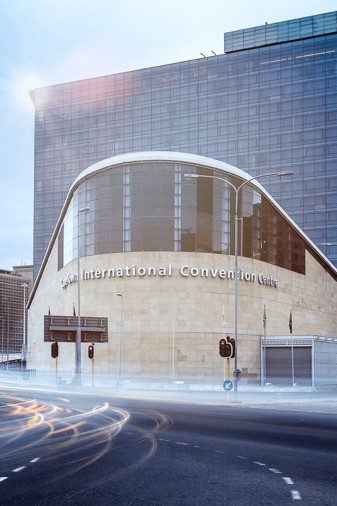
The combined ISMRM and ISMRT 2026 annual meeting was held May 9–14 in Cape Town, South Africa, with the theme of “Ubuntu in Action!” In English, Ubuntu translates to “I am because we are.” The international ISMRM community includes more than 7,500 clinicians, physicists, engineers, biochemists, technologists, and industry professionals.
Notably, Craig H. Meyer, PhD, a professor of biomedical engineering (School of Engineering and Applied Science), radiology, and medical imaging (School of Medicine) at the University of Virginia (UVA), earned the society’s Gold Medal, the highest honor for lifetime achievement and impact in the field of magnetic resonance imaging. The society noted Dr. Meyer’s pioneering scientific contributions in the areas of spiral k-space scanning, spectral-spatial excitation for water and fat excitation, and cardiovascular MRI. See the UVA Press Release.
There are 28 invited faculty talks (educational sessions), reviewed abstract presentations (scientific sessions), or combined educational and scientific sessions that should be of interest to the focused ultrasound community:
- 351-01-017. Noninvasive Mapping of Ultrasound Wavefronts Using Radiofrequency Magnetic Resonance Hydrophone (RF-MRH) by Theodore Brierre from Massachusetts General Hospital and Harvard Medical School in Boston, MA, USA (Summa Cum Laude Merit Award)
- 361-03-016. Susceptibility Artifact Correction in MR Thermometry during MR-HIFU of Uterine Fibroids Using Laplacian Boundary Value Method by Mingming Wu from LMU Klinikum Munich in München, Germany
- 368-03-005. Electromagnetic Compatibility of Low-Field Portable Magnetic Resonance Guided Focused Ultrasound System by Wei Huang from Fudan University in Shanghai, China
- 369-03-007. Multimodal MRI Tracks Synergistic Neurovascular Repair with MSC-Exosomes and Low-Intensity Pulsed Ultrasound after Rat MCAO by Tiefeng Li from Qinhuangdao Municipal No. 1 Hospital in Qinhuangdao, Hebei, China
- 369-06-013. Safety and Efficacy Evaluation of Magnetic Resonance–Guided Focused Ultrasound for Blood-Brain Barrier Opening by Rufeng Jia from Zhengzhou University People’s Hospital and Henan Provincial People’s Hospital in Zhengzhou, China (Presented by Meiyun Wang)
- 461-01-003. Towards Imaging Microbubble Contrast Agents with MRI: Simulation, Phantom, and Preclinical Results by Milo Commandeur from TU Delft, in Delft, The Netherlands (Presented by Ayda Arami)
- 462-05-008. Presurgical Thalamic DTI Associations with 3-Month Outcome Following MR-Guided Focused Ultrasound for Essential Tremor by Conrad Rockel from the University of Calgary in Calgary, AB, Canada
- 462-05-014. Combining MR-Acoustic Radiation Force Imaging and MR-Shear Wave Elastography for Non-Invasive Acoustic Intensity Estimation by Henrik Odéen from the University of Utah in Salt Lake City, UT, USA
- 463-01-011. Hybrid 2D CNN-Transformer Achieves Fast and Robust Ktrans Mapping of FUS-Induced BBB Opening by Akito Yamauchi from Columbia University in New York, NY, USA (Presented by Zongyu Li)
- 467-05-015. Low-Field Elliptical Halbach Magnet Scanner for MR-Guided Focused Ultrasound Deep-Brain Therapies by Pablo García-Cristóbal from the Institute for Molecular Imaging and Instrumentation (i3M), Consejo Superior de Investigaciones Científicas, Universitat Politècnica de València in Valencia, Spain (Presented by José Algarín)
- 530-03-006. Intralaminar Thalamic Recruitment Predicts Clinical Benefit after MRgFUS Thalamotomy for Essential Tremor by Darren Clark from the University of Calgary in Calgary, AB, Canada
- 530-03-007. Calculating Tissue Heating from Simultaneous Transcranial Ultrasound Stimulation and MRI by Kristen Zarcone from Case Western Reserve University in Cleveland, OH, USA
- 530-03-009. UHF MRI (7T) Symbiotic QSM-DTI Tractography for Augmented Imaging Support in MRgFUS Neurosurgery by Martin Ndengera from University Hospitals of Geneva in Geneva, Switzerland (Presented by Rares Salomir)
- 530-03-010. IVIg Delivery to the Motor Cortex in Amyotrophic Lateral Sclerosis Patients using a Novel MR-Guided Focused Ultrasound System by Ryan Jones from Sunnybrook Research Institute in Toronto, ON, Canada (Presented by Kullervo Hynynen)
- 563-05-003. Altered Static and Dynamic Functional Motor Subnetworks in Essential Tremor After Magnetic Resonance-Guided Focused Ultrasound by Haoxuan Lu from Chinese PLA General Hospital in Beijing, China
- 564-02-001. 3D MR Thermometry Using Bi-Directional Segmented EPI for Transcranial Focused Ultrasound by Michael Malmberg from the University of Utah in Salt Lake City, UT, USA (Presented by Henrik Odéen)
- 564-02-002. Combined-Echo Helical Stack-of-Stars Imaging for Rapid Magnetic Resonance Temperature Imaging by Michael Malmberg from the University of Utah in Salt Lake City, UT, USA (Presented by Henrik Odéen)
- 564-02-003. Combined-Echo Helical Stack-of-Stars Imaging for Acoustic Radiation Force Imaging by Michael Malmberg from the University of Utah in Salt Lake City, UT, USA (Presented by Henrik Odéen)
- 564-02-005. Magnetic Resonance Measurement of Oblique Ultrasound by Nathan Thyberg from Brigham Young University, in Provo, UT, USA (Presented by Christian Hales)
- 564-02-008. An Acquisition and Reconstruction Approach for Closed Loop Transcranial Focused Ultrasound Stimulation Navigation by Shota Hodono from Radboud University in Nijmegen, The Netherlands
- 564-02-009. 3D Displacement Vector Field Imaging for TUS Cross-Beam Localization by Shota Hodono from Radboud University in Nijmegen, The Netherlands
- 564-02-010. UTE/ZTE MRI-Derived Synthetic CT for Transcranial Focused Ultrasound Planning: Validation in Non-Human Primates and Humans by Dong Liu from Columbia University in New York, NY, USA (Presented by Kay Igwe)
- 564-02-011. Validation of Quantitative MR-ARFI for Acoustic Dosimetry in Transcranial Ultrasound Stimulation by Kristen Zarcone from Case Western Reserve University in Cleveland, OH, USA
- 565-03-013. Reducing MR-ARFI Scan Time Using a Physiological Noise-Free Reference Image and Polynomial Fitting for Noise Removal by Shota Hodono from Radboud University in Nijmegen, The Netherlands
- 568-01-010. Safety Validation of a Magnetic Resonance Hydrophone by Christian Hales from Brigham Young University in Provo, UT, USA
- 570-08-225. Investigating the Effect of Focused Ultrasound on Relaxation and Oxygenation in an Intracerebral Haemorrhage Stroke Rat Model by Fabian Küppers from Forschungszentrum Juelich in Juelich, Germany
- 663-03-011. Quantitative MRI Evaluation of Glymphatic–Lymphatic Clearance by Low-intensity Focused Ultrasound in Non-Human Primate by Yyochul Lee from Seoul National University College of Medicine in Seoul, Republic of Korea
- 666-03-012. DCE-MRI Gadolinium Leakage Assessment in a Novel Mouse Model of Ultrasound-Microbubble–Mediated Blood-Brain Barrier Opening by Shakira van der Panne from Amsterdam University Medical Center at the University of Amsterdam in Amsterdam, The Netherlands
Next Meeting: ISMRM 2027 will be held May 8–13 in Vancouver, British Columbia, Canada.
Hope for Hypothalamic Hamartomas (HH) 2026 Patient and Family Conference
With a theme of “Facing the Future Together,” Hope for HH held its 2026 Patient and Family Conference July 24–26 in Chapel Hill, North Carolina. As a volunteer-based nonprofit organization founded by parents of children with HH, this organization seeks to create a single, credible source for information about the diagnosis, treatment, and support of individuals with HH.
As both an in-person and virtual international conference, individuals of all ages living with HH Syndrome, along with caregivers, siblings, and extended family, attend presentations by experts to learn about clinical and research advances while building meaningful connections with other community members.
John Rahgeb, MD, chief of the Department of Surgery at Nicklaus Children’s Hospital in Miami, Florida, attended this year’s meeting and presented an update on his clinical trial investigating focused ultrasound to treat benign pediatric brain tumors, which was recently extended for children with HH.
“Hypothalamic Hamartoma Syndrome can be an isolating diagnosis, and from the very beginning of surgical options, hope has meant waiting for something better and safer to exist,” said Erica Webster, the president and co-founder of Hope for HH. “Now, focused ultrasound trials are extending to include HH, a less invasive path forward for patients of all ages, and proof that facing the future together means real progress for this community. That’s why bringing researchers like Dr. Ragheb directly to our Hope for HH conference matters: Our families and individuals living with HH Syndrome could ask their questions, connect with the people doing this work, and understand what it could mean for their own lives.”
See the Meeting Website and Full Agenda
The 2026 BRAIN Initiative® Conference
Launched in 2013, the Brain Research Through Advancing Innovative Neurotechnologies (BRAIN) Initiative is a public-private collaborative effort to develop new tools that will revolutionize our understanding of the brain.
Now taking place on a biennial schedule, the 2026 BRAIN Initiative Conference was held August 11–13 in Bethesda, Maryland. It convened awardees, staff, and leadership from its contributing federal agencies (NIH, NSF, DARPA, IARPA, and FDA) plus a wide range of stakeholders (participating non-federal organizations, media, public, and Congress) to build community, discuss scientific developments and potential new directions, and identify areas for collaboration and research coordination.
The program included 27 scientific talks – via plenary presentations and scientific sessions – along with 368 posters. Topics covered basic and mechanistic neuroscience, tools for measuring and understanding brain function, neural recording and stimulation, artificial intelligence/machine learning and computational neuroscience, brain-computer interfaces, connectivity, and emerging approaches to translating neuroscience discoveries toward human applications.
Bin He, PhD, Trustee Professor of Biomedical Engineering at Carnegie Mellon University, presented a talk titled “Bidirectional Brain-Computer Interfaces: Decoding and Modulating the Brain” in Thursday’s Advancing Human Neuroscience session.
“There was an emphasis on translating findings across species, modalities, and datasets so that basic neuroscience discoveries can ultimately become more comparable and usable for human applications,” said Carena Cornelssen, PhD, the Foundation’s director of research funding operations, who attended the conference. “A recurring theme was the need for large, interdisciplinary collaborations spanning basic neuroscientists, engineers, computational researchers, clinicians, and other specialists to move neurotechnologies from mechanistic discovery toward human – and ultimately – clinical applications.”
Five focused ultrasound posters were presented at the conference:
- A069. Wearable Closed-Loop HIFU Targets Deep REM-Regulatory Circuits: Target-Specific Effects on Sleep Microstructure and Vigilant Attention by S. Gupta et al. from Uniformed Services University of the Health Sciences
- A092. Cell-Type-Specific Neuromodulation by Transcranial Focused Ultrasound and Its Application in Bidirectional Sensory Pathway Modulation by H. Gao et al. from Carnegie Mellon University
- C041. Machine Learning–Based Evaluation of Tremor Severity and Treatment Response Using Wearables Following Focused Ultrasound Surgery by H. Cole from the Barrow Neurological Institute
- C083. Bayesian-Enhanced Closed Loop Optimization of Ultrasound Protocols for Targeted and Precise Neuromodulation by T. Di Ianni et al. from the University of California–San Francisco
- C086. Electrophysiology-Compatible Wearable Transcranial Focused Ultrasound Array for Modulating Reward Cue–Related Neural Activity and Behavior in Freely Moving Rats by M.G. Kim et al. from Carnegie Mellon University
The full text of each of these abstracts can be found by searching the Poster Abstract Book.
The meeting website says that all session recordings will be posted on the BRAIN Initiative YouTube channel.
Society for NeuroOncology (SNO)/American Society of Clinical Oncology (ASCO) CNS Metastases
With the theme of “From Moonshot to Groundshot: Transforming Science into Impact,” the SNO/ASCO CNS Metastases Conference was held August 13–15, 2026, in Boston, Massachusetts.
As an interdisciplinary meeting designed to connect discovery to clinical impact for the treatment of brain and leptomeningeal metastases, sessions addressed basic, translational, and clinical research. Topics covered in oral presentations and the poster networking reception include the tumor microenvironment, treatment strategies, precision neurosurgery, modern radiotherapy techniques, and systemic therapies.
Session 7: Getting Through the Blood Brain Barrier – Drugs and Delivery included an invited presentation from Elisa Konofagou, PhD, the Robert and Margaret Hariri Professor of Biomedical Engineering, Radiology, and Neurological Surgery at Columbia University’s Fu Foundation School of Engineering and Applied Science. Dr. Konofagou’s talk was titled “Portable Focused Ultrasound for Clinical Blood-Brain Barrier Opening in Brain Cancer Patients.” She also participated in the panel discussion at the end of the session.
The same session also included an abstract presentation by Jing Li, PhD, from the Karmanos Cancer Institute at Wayne State University School of Medicine in Detroit, MI:
- DSAI-04. Focused Ultrasound–Enhanced Drug Delivery to theHuman Brain and Brain Tumors: Mechanistic and Quantitative Insights from Physiologically Based CNS Pharmacokinetic Modeling
In Vivo Ultrasound Imaging Gordon Research Conference

The biennial In Vivo Ultrasound Imaging Gordon Research Conference (GRC) was held August 16–21, 2026, in Waterville Valley, New Hampshire. This meeting convened international researchers to discuss cutting-edge innovations across medical ultrasound, ranging from advanced imaging and drug delivery to histotripsy and neuromodulation. In compliance with GRC confidentiality policies, please view 13 focused ultrasound–related presentations on the meeting website.